Ten years from now, your life will not look the same as it does today. You might be living somewhere new. Your circle may have shifted. Your routines will almost certainly have changed. You’ll be older in ways that are subtle and surprising.
Your wedding photos, though, will still be exactly as they are now.
The real question is whether you’ll still have easy access to them.
When people talk about a wedding photo legacy, it can sound dramatic. But it’s actually practical. Legacy isn’t about grandeur, it’s about longevity. It’s about whether the images from one of the most emotionally significant days of your life are still intact, accessible, and visible a decade later.
And that depends entirely on how they’re preserved.
Why Digital Storage Isn’t Enough, Even If You Think It Is
Digital storage can feel like a safety net. You’ve got a gallery link, a download, maybe a cloud backup. It should be safe, right? Unfortunately, convenience isn’t the same thing as permanence. Hard drives fail without warning. Devices get replaced or recycled. Cloud services change policies or sunset features. Logins get forgotten. Files get buried in folders you never revisit.
Most couples fully intend to organise their images properly. They mean to back them up. They intend to print something “later.” But life can get busy. Files sit untouched and years pass...
If you want to preserve wedding photos in the UK in a way that survives life changes, storage alone won’t do it. You need preservation, not just backup.
Albums Give Your Photos a Life Beyond Screens
This is where printed albums really matter.
A wedding album is the difference between having your photos hidden in a drive and having them integrated into your home, your routines, and your future memories.
Printed albums become objects you:
- reach for
- open on anniversaries
- hand to guests
- pass between generations
Unlike digital galleries, they don’t depend on passwords, devices, or subscriptions. They exist in real space, tactile and present. Albums are a physical form of legacy, not décor. They’re designed to be held, loved, and revisited over years and decades.
And there’s another layer to this: the quality of the materials themselves.
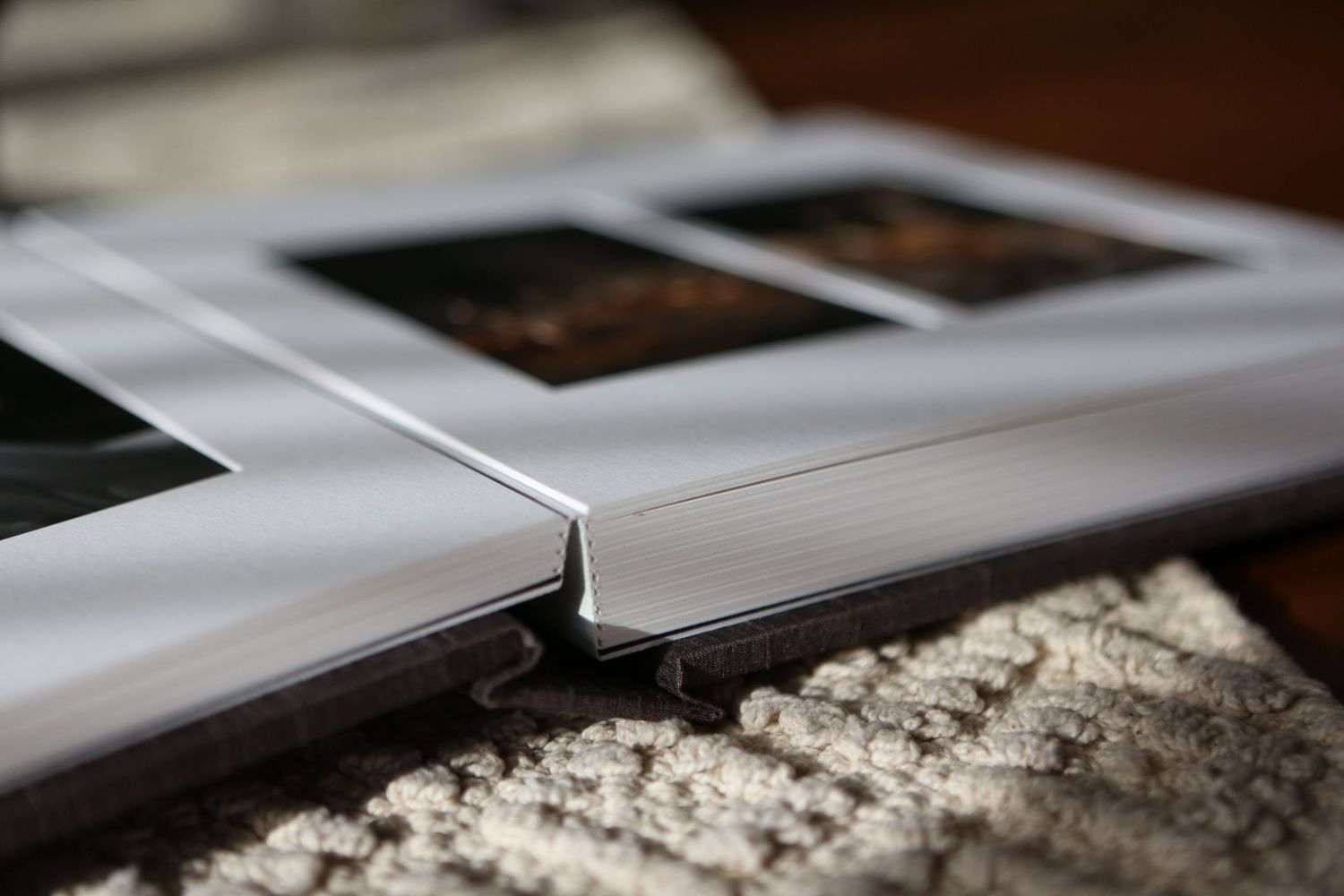
Professional wedding albums today use archival grade papers, rich pigment inks, and craftsmanship techniques that are designed to last. Pages can lay flat to display panoramic spreads. Covers in cloth or leather give albums presence and durability. These details aren’t decorative extras, they’re investments in longevity.
When your photos are printed on materials like this and bound with care, they don’t just exist, they endure.
Albums Built for Real Life, Not Just Shelves
One of the biggest reasons couples delay printing wedding albums in the UK is simple: it feels like another job.
Choosing images. Deciding layouts. Wondering if you’ve included too many or too few. Trying to tell a story without knowing how it should flow.
But rest assured, I wouldn't let that responsibility fall on you. When I design an album, I’m not just placing photos on pages. I’m shaping the narrative of your day. I know which moments need space. Which spreads need breathing room. Where to slow things down. Where to let impact land.
Album design is part of the storytelling process, not an afterthought.
So What Really Happens to Your Wedding Photos in 10 Years?
Here’s the honest pattern I see as a professional.
Images stored only digitally are rarely lost in one dramatic moment. They just drift. A laptop gets replaced. A hard drive fills up. A cloud account changes. The gallery link expires and no one notices. The files still exist somewhere, technically, but they’re no longer part of your life.
They become a drawer search. A renamed folder. A “we really should print something.” A good intention that quietly ages. There’s no catastrophe. Just distance.
Albums behave differently.
Because they’re physical, they don’t drift. They stay where you put them. On a shelf. On a coffee table. In a cabinet that gets opened every anniversary. They gather context. They become familiar in the way only handled objects can. You don’t have to remember a password to revisit them. You don’t have to plug anything in. You don’t have to schedule time to “go through the photos.” You simply reach for them.
Over time, that accessibility changes how often they’re seen. And how often something is seen determines how deeply it embeds into family history.
I’ve watched couples who invested in albums build quiet rituals around them. A glass of something on their anniversary. Sitting on the floor and turning pages. Showing visiting friends the spread they love most. Tracing over a grandparent’s face years later.
That repetition builds emotional weight.
This isn’t about nostalgia or tradition. It’s about behaviour and memory. Objects that are visible get used. Objects that are used become significant.
If your goal is a wedding photo legacy, something that persists beyond the day itself, then printing and albums are the difference between hope and certainty. Hope says, “We’ll get to it. Certainty says, “It’s already part of our home.”
Ten years from now, your wedding won’t feel recent. It will feel foundational. The question is whether your photographs will feel equally present, or whether they’ll be something you have to go searching for?
That choice gets made much earlier than most people realise.
Want to learn more about albums?
Ready to chat?
If you’re looking for an alternative wedding photographer who gets what you want and delivers photos you can be proud of, I’d love to hear from you.
Fill out the contact form, send me an email, or let’s chat over a coffee if you’re nearby. I’m here to help make your day feel effortless, so you can focus on what matters.